
Haziza House Services · Ceiling repair · Brisbane
Ceiling repair in Brisbane
Storm leaks, sagging sheets in 70s and 80s homes and older ceilings that need testing before anyone cuts them. We repair ceilings across Brisbane's south and east and Logan City.
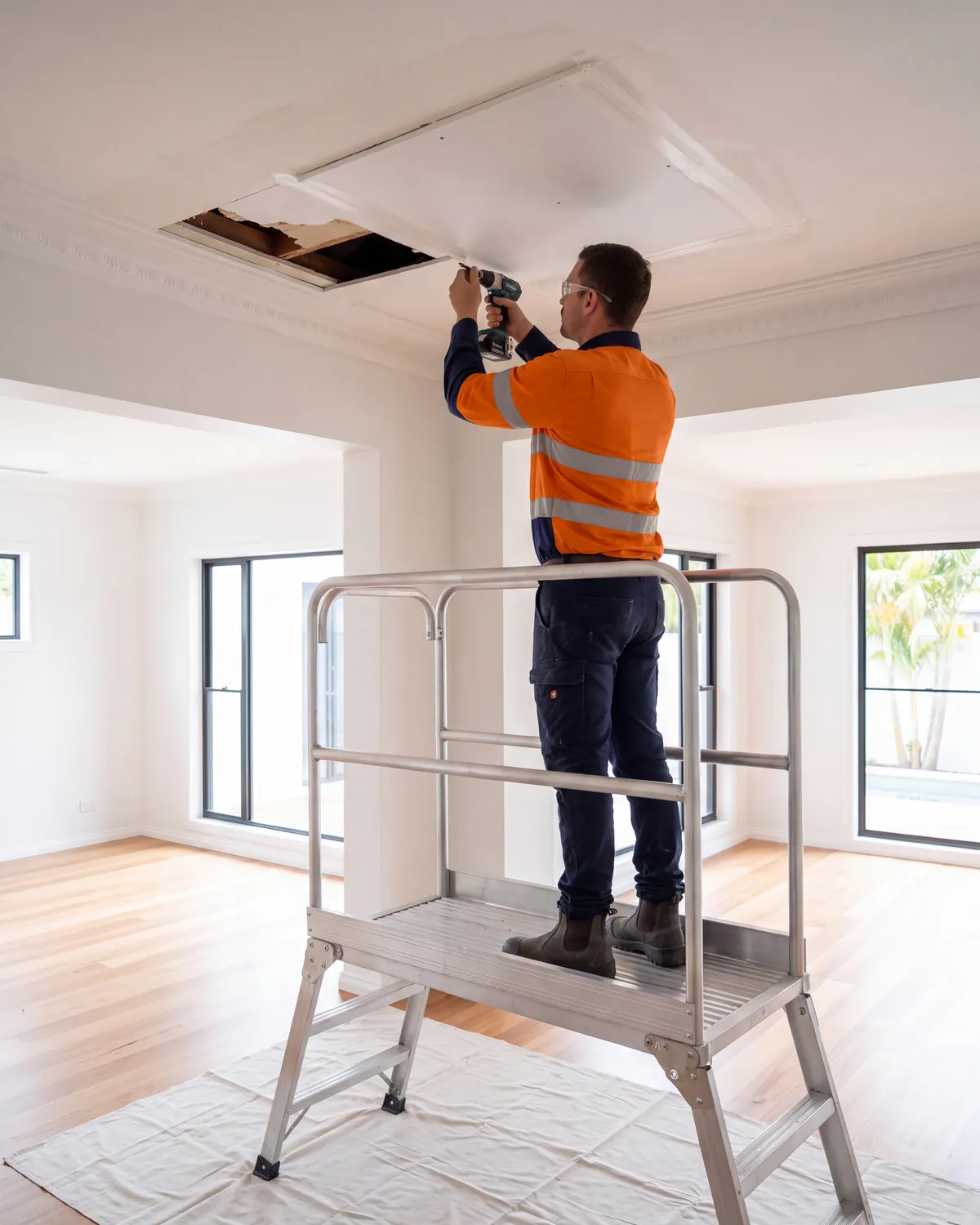
- Fully licensed · QBCC338940C
- InsuranceFully insured
- Warranty3 months on new installations
- Service areaGold Coast & Brisbane
Brisbane
Brisbane ceilings, from VJ to gyprock
What a ceiling is made of changes the repair, and in Brisbane it could be several things. Queenslanders often have VJ timber ceilings, post-war homes may have fibrous plaster or fibre cement sheets with cover strips over the joins, and homes from the 1970s onward are mostly plasterboard, some with a textured finish. Before we quote, we work out which one you have, because a VJ ceiling is repaired with timber boards, while a sagging gyprock ceiling is refixed or re-sheeted.
Older ceilings need caution. Houses built before about 1990 may have asbestos in some ceiling sheets, and textured ceilings from that era can contain it too. If your ceiling could be one of these, it needs testing before it's cut, drilled or sanded, and we'll tell you when we think that applies. In 1970s to 90s brick homes around Springwood, Sunnybank and Carindale, the more common problem is plasterboard that has sagged as the old adhesive gave up in the heat of the roof space.
Storm season is when a lot of Brisbane ceilings get damaged. Hail and heavy rain crack tiles, lift roof sheets and overflow gutters, and the water shows up as a stain or a bulge. A roofer or plumber has to stop the leak first, and the ceiling needs to dry before we replace anything. We're based in Hope Island, 30 to 60 minutes from most Brisbane-side suburbs, so we book ceiling repairs ahead on set days and don't do emergency call-outs. If a ceiling is sagging with water, keep everyone out of the room below.
What we do
Ceiling repairs we do in Brisbane
Storm and hail damage
Ceilings stained or soaked after a summer storm, cut back to sound board and re-sheeted once the roof is fixed and the area has dried. We can give you a written quote to pass on to your insurer.
Sagging sheets in brick homes
Plasterboard ceilings in 70s to 90s homes that have dropped between the battens, refixed with screws where the board is still sound, or replaced where it has bowed too far to pull back.
VJ timber ceilings
Split, stained or sagging VJ ceiling boards in Queenslanders and older timber homes replaced with matching boards rather than patched with plaster, so the ceiling still reads as timber once it's painted.
Fibrous plaster ceilings
Cracked or drooping fibrous plaster ceilings in older homes refixed where the sheets are sound, or sections replaced with new board. Where it's unclear whether a sheet is fibrous plaster or fibro, it's tested first.
Cornice in older homes
Older homes often have deeper or more decorative cornice than modern stock. We find the closest match available, or replace the full run along a wall so the repair doesn't stand out.
Ceilings under bathrooms
Stained ceilings under upstairs bathrooms in two-storey Carindale and Logan homes, repaired once a plumber has found and fixed the leak. We cut back to sound board and check the framing above is dry.
Local conditions
What damages Brisbane ceilings
Summer storms and hail
Brisbane's severe storms bring hail, heavy rain and wind that can lift roof sheets and crack tiles. Water often runs along the framing before it shows, so the stain may be some distance from the actual leak. That's why the roofer goes first.
Heat in the roof space
Brisbane roof spaces get very hot through summer, and over the decades that heat breaks down the adhesive holding older plasterboard to the battens. A ceiling sagging in neat lines along the battens is usually this, not a leak.
Textured ceilings
Many 70s and 80s homes have textured ceilings. Patching one so the repair blends in is harder than patching a flat ceiling, and older textured finishes may contain asbestos, so they're tested first. Sometimes re-sheeting the whole ceiling flat gives the cleanest result.
Areas we service
Where we work in Brisbane
- Ceiling repair Beenleigh
- Ceiling repair Logan
- Ceiling repair Springwood
- Ceiling repair Brisbane South
- Ceiling repair Mount Gravatt
- Ceiling repair Carindale
- All of Brisbane
More from Haziza House Services
- Carpenter in Brisbane
- Custom doors in Brisbane
- Deck builder in Brisbane
- Door installation in Brisbane
- Door repair in Brisbane
- Feature ceilings in Brisbane
- Timber fencing in Brisbane
- Fly screen repair in Brisbane
- Handyman in Brisbane
- Door handles and locks in Brisbane
- Patch and paint in Brisbane
- Plaster and gyprock repair in Brisbane
- Plasterboard installation in Brisbane
- Sliding door repair in Brisbane
- Built-in wardrobes in Brisbane
- Ceiling repair on the Gold Coast
- Full ceiling repair service details
FAQ
Ceiling repair questions
My ceiling was damaged in a storm. What should I do first?
Keep people out from under any sag. If water has reached a light or fan, switch that circuit off at the board and get a licensed electrician to check it before it's used again. Get a roofer to fix the roof and contact your insurer. Once the roof is watertight, send us photos and we'll quote the ceiling, in writing if your insurer needs it.
How do I know if my ceiling might contain asbestos?
You can't tell by looking. As a rough guide, homes built before about 1990 may have asbestos in some ceiling sheets or textured finishes, and the only way to know is to have a sample tested. If we think your ceiling could contain it, we'll tell you before any work, and we won't cut or sand it until it's been cleared.
Can you fix the VJ ceiling in my Queenslander?
Usually. Split, stained or sagging VJ boards can be replaced with new boards in a matching or close profile, and loose boards refixed to the joists. Once it's painted, the repair blends in with the rest of the ceiling. If water has damaged the joists too, we'll show you.
Who repairs the ceiling after a storm, the roofer or you?
Usually both, in that order. The roofer makes the roof watertight, then we repair the plasterboard, cornice and paint inside. Some insurers arrange their own builders, so it's worth checking with yours before you book anyone.
Helpful reading
Guides from the job
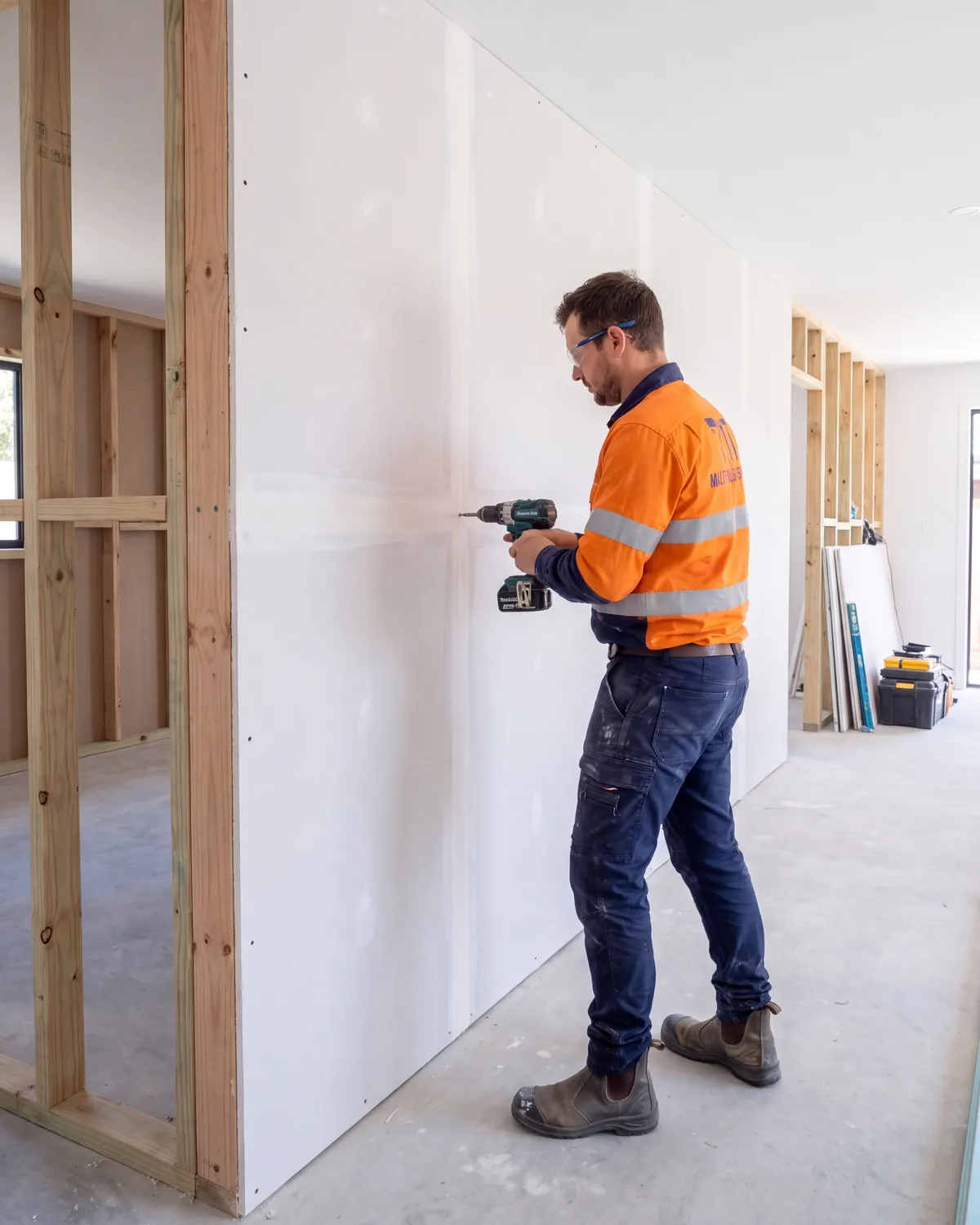 Sagging ceiling warning signs, and when to act
The early signs a plasterboard ceiling is starting to sag, why it happens, and when to keep clear and call.
Water-damaged ceiling repair: what to do, and in what order
Stains, bubbling and soft plasterboard explained, plus when to patch and when to replace a sheet.
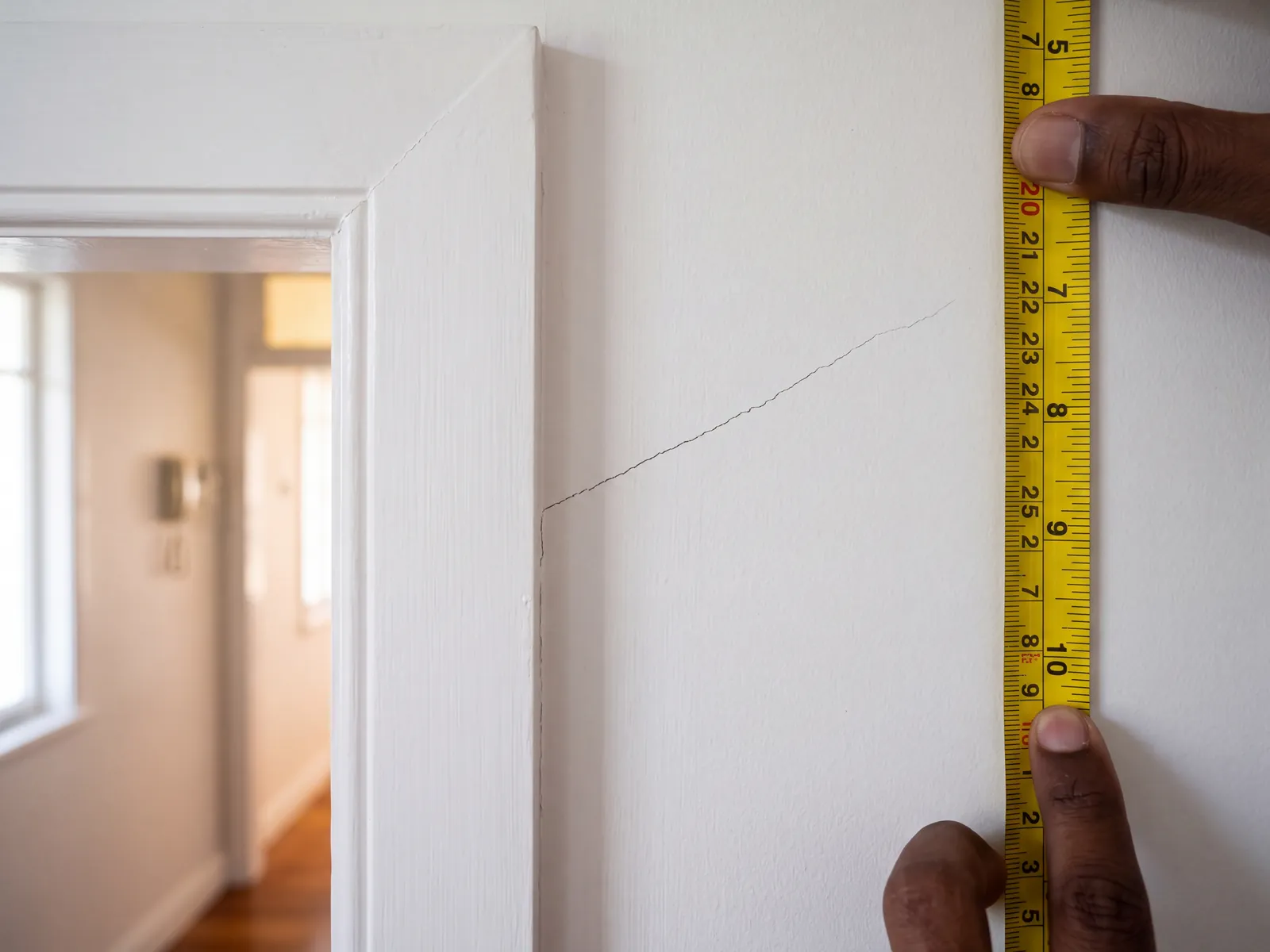 Plaster cracks explained: which ones to worry about
Cosmetic cracks versus warning signs, how to monitor a crack, and how lasting repairs are done.
Free quote · Haziza House Services
Get a quote in Brisbane
Send a few details and photos of the job. We usually reply the same day.
0410 442 503 multihouseservices@gmail.com