Repairs
Plaster cracks explained: which ones to worry about
Most cracks in plaster walls and ceilings are cosmetic. Some aren't. Here's how to read them, how to keep an eye on them, and when to call an engineer instead of a plasterer.
Almost every house has a few cracks in the plaster. Most of them are cosmetic and easy to repair. A few are a sign of something that needs a professional assessment before anyone patches over it. Here's how to tell the difference, and what to do about each.
First, the important bit
We're carpenters who repair plaster, not structural engineers. If a crack is large, growing, or running diagonally, have it checked by a structural engineer or a building inspector before it's repaired. The same goes if cracks appear along with doors and windows that suddenly jam, gaps opening up at the skirting or cornice, cracks in external brickwork or the slab, or a sagging ceiling. Patching a crack doesn't fix the cause, and covering it up can hide something an engineer needs to see.
Cracks that are usually cosmetic
Hairline cracks at the corners of doors and windows
The corners of openings are stress points, because the wall framing is interrupted there and plasterboard sheets often join close by. Fine cracks running a short way out from the corner of a door or window are very common, especially after a dry spell or a wet season. On their own, and if they're not getting bigger, they're usually cosmetic.
Straight cracks along sheet joints
Plasterboard comes in sheets, and the joints are taped and set with compound. If a joint wasn't set well, or the framing behind it moved, you get a long, straight crack along the joint line. It looks dramatic but is normally a finishing problem.
Cracks along the cornice
A gap or crack where the cornice meets the ceiling or wall is common in Queensland homes. Roof framing moves with heat and moisture, and in summer the ceiling can lift and drop slightly. A small, even crack along the cornice is usually that movement. A cornice that has come away in a section, or is sagging, needs a closer look.
Screw and nail pops
Small round bumps or cracked circles in a regular pattern are fixings that have pushed through the surface. They're common in newer homes as the framing timber dries and settles.
Cracks that need an expert
- Diagonal cracks, especially ones running from the corner of a door or window up towards the ceiling
- Cracks wider at one end than the other
- Cracks you can fit a coin into, or that you can see through
- Cracks that are getting longer or wider over weeks or months
- Stepped cracks in brickwork, or cracks in the floor or slab
- Cracks that come back quickly after a repair
- Any crack with a sagging ceiling, a water stain or a damp smell
Any of these can point to movement in the footings, the frame or the roof. In South East Queensland, reactive clay soils and older homes on stumps make movement more common, so it's worth taking seriously. A structural engineer or building inspector can tell you what's causing it and whether anything needs doing before the cosmetic repair.
How to monitor a crack
- Mark each end of the crack lightly with a pencil and write the date beside it.
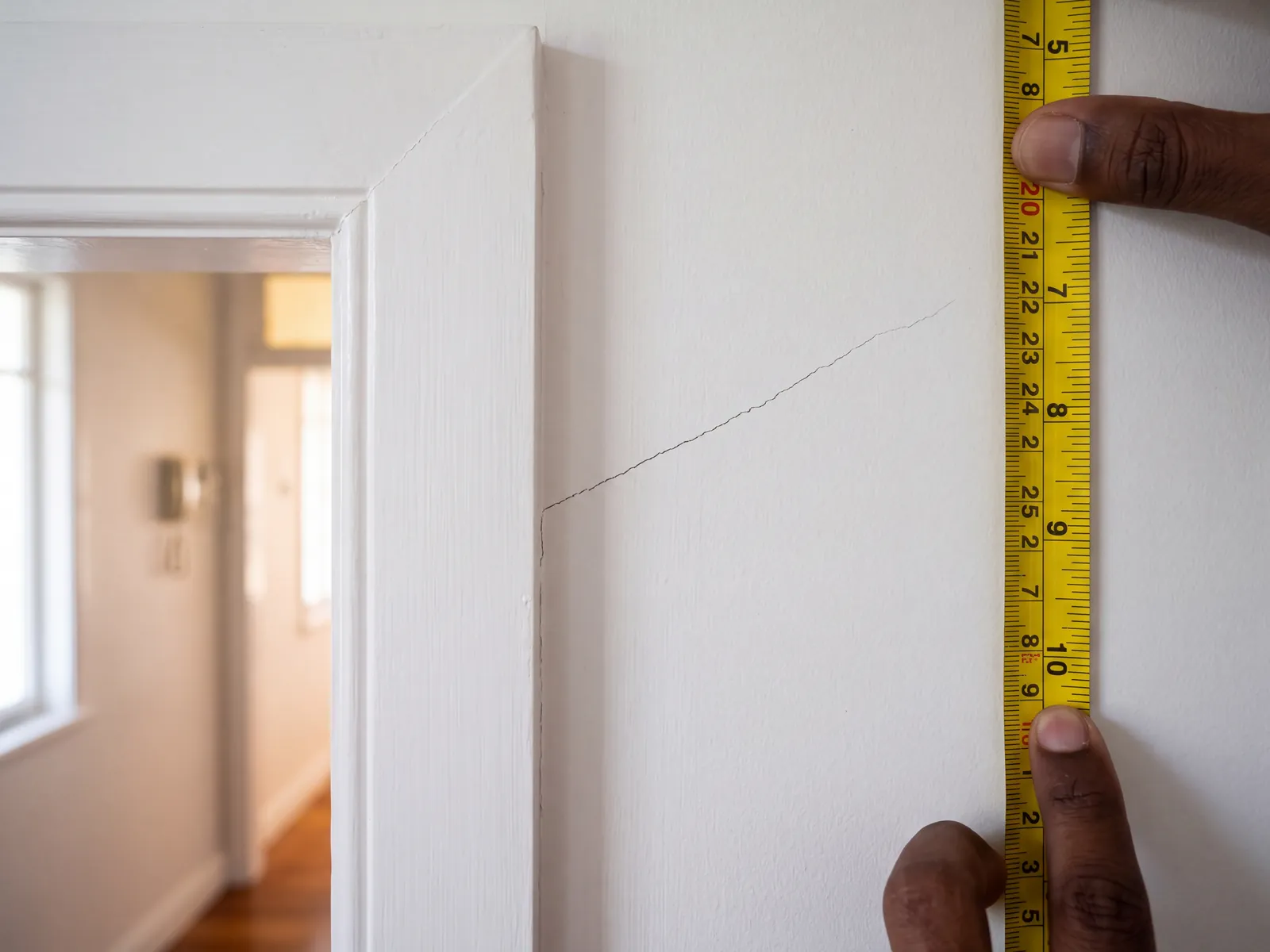
- Take a photo with a tape measure held against the crack for scale.
- Check it every few weeks, and after big weather changes.
- If it's grown past your marks, widened, or new cracks have appeared nearby, get it inspected.
A few months of photos is also very useful to an engineer or inspector, because it shows whether the movement is seasonal or ongoing.
Water stains are a different problem
A crack with a brown ring or bubbling paint around it usually means water. Find and fix the leak first, whether that's a roof plumber, a plumber or a tiler. We don't do plumbing, but once the leak is fixed we can replace the damaged plasterboard and make the ceiling or wall good again. A ceiling that's sagging from water needs attention quickly, so keep people out of the room underneath.
How we repair cosmetic cracks
A crack that's just been filled and painted often reappears within months. For a repair that lasts, we open the crack up slightly, re-fix any loose plasterboard to the framing, tape the joint where needed, then build it up with compound in thin coats and sand it flush. Cornices that have pulled away get re-glued and fixed. Then we prime and paint so the repair disappears into the wall.
Matching paint is the tricky part. Older paint fades, so painting just the patch can leave a visible square. Often the neatest result is repainting the whole wall, corner to corner.
Getting it fixed
If your cracks are the cosmetic kind, we can repair them as part of our plaster and gyprock repairs, or fix the ceiling and cornice through our ceiling repair service. If you want the repairs painted too, see paint and plaster. We work across the Gold Coast and Brisbane.
Send a photo of the crack with a tape measure next to it and tell us how long it's been there. If it looks cosmetic, we'll quote the repair. If it looks like it needs an engineer or inspector first, we'll tell you that instead.