Care & maintenance
How to look after fences, screens and timber doors in Queensland
Outdoor timber lasts for years in Queensland when it's cleaned and recoated before it fails. Here's a practical routine for fences, gates, screens and timber doors.
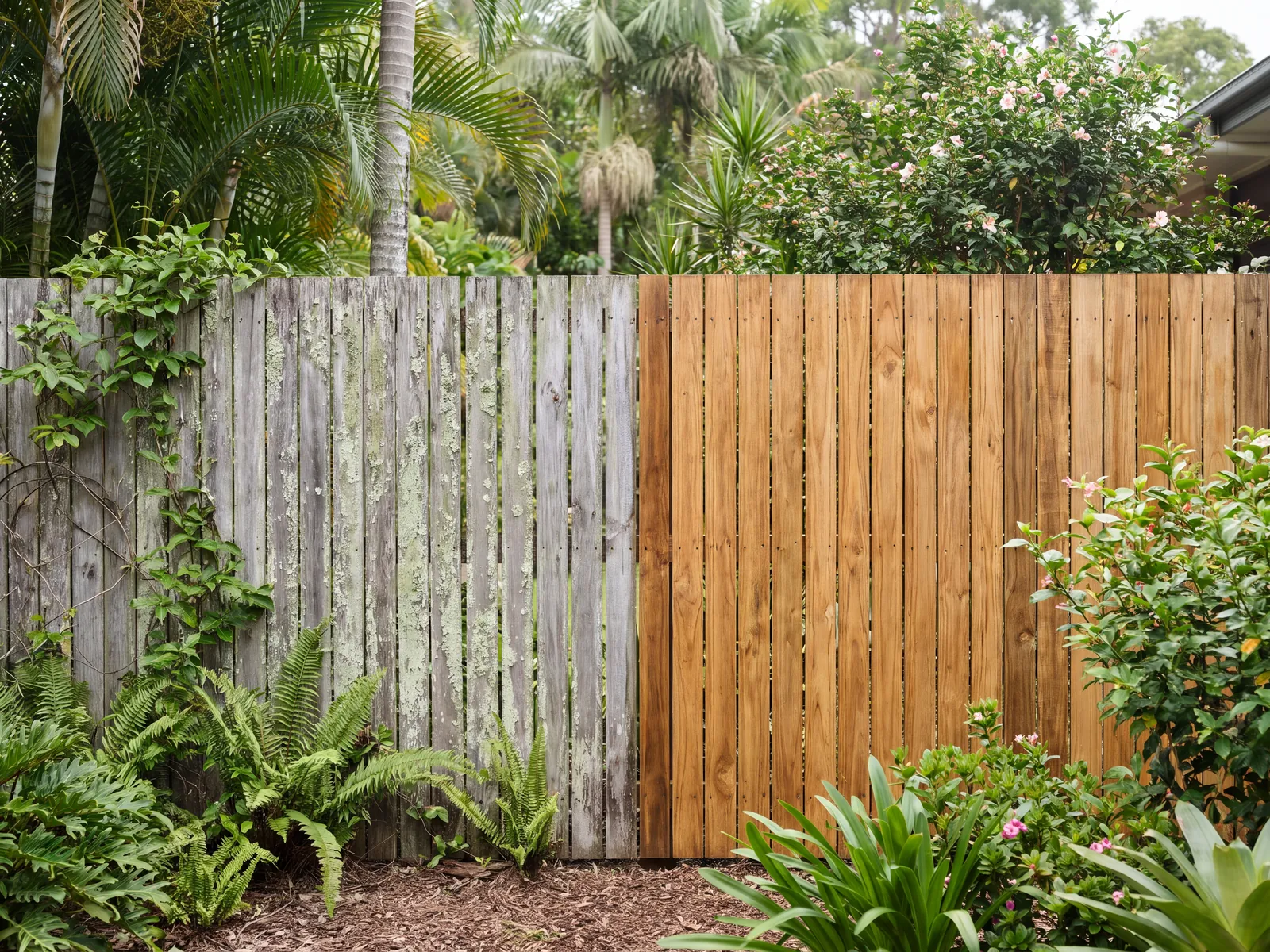
Fences, gates, batten screens and timber doors don't take foot traffic like a deck does, so their finishes last longer. But they cop the same sun, rain and humidity, and they're easier to forget until the palings are grey and the front door is peeling. Here's the routine we recommend for outdoor timber on the Gold Coast and in Brisbane. (For decks, see our deck care guide.)
Know what you're looking after
Most fences and gates around here are either treated pine or hardwood. Treated pine is rated by hazard level: H3 for outdoor use above the ground, and H4 or higher for posts in the ground. When treated pine is cut, the fresh end needs brushing with an end-seal preservative, because the treatment doesn't always reach the core. Hardwood palings and posts, such as spotted gum or merbau, are naturally durable but still grey and split without a finish.
Batten screens are often hardwood or blackbutt with every face exposed, so they dry out faster than a flat fence. Timber doors are a joinery product, built from thinner, finer timber that moves more if any face is left unsealed.
Step-by-step: cleaning outdoor timber
- Clear plants, vines and garden beds back from the timber so you can reach every face.
- Wet the timber with a hose and scrub with a soft to medium brush and a timber cleaner. Use a mould cleaner on the shady side of a fence, where black spots usually start.
- Rinse from the top down so dirty water doesn't run over clean timber.
- Let it dry fully. Vertical timber dries faster than a deck, but give it at least a full dry day before oiling or painting.
- Lightly sand rough or furry areas, and punch or replace any lifted nails.
Go easy with a pressure washer on palings and battens. They're thin, and a close jet can split them or leave stripes that show through the oil.
Oil, stain or paint?
The right finish depends on the look you want and how much upkeep you're happy with.
- Penetrating oil: soaks in, keeps the timber look and wears away gradually. Recoating is simple: clean, dry, oil. It needs doing more often than other finishes.
- Pigmented stain or tinted oil: still soaks in, but the colour gives far better UV protection. This is what we suggest for most fences and screens in full sun.
- Paint: the longest gap between coats on vertical timber, and good for gates and painted doors. But once timber is painted you can't go back to oil without stripping it, and peeling paint has to be scraped and sanded before recoating.
Whatever you choose, coat every face you can reach, including the tops of palings and the end grain of battens. End grain soaks up water like a straw, and that's where rot and splitting start.
How often, roughly
Exposure matters more than the calendar. Fences and screens in full afternoon sun break down much faster than ones in shade or under eaves. As a rough guide, oils and stains on vertical timber often last one to three years here, and paint longer if the prep was good. Check the product's own advice, and use the water test: if water beads on the timber, the finish is still working. If it soaks straight in, recoat.
Fences and gates
- Keep soil, mulch and garden beds off the bottom of the palings and rails. Timber in constant contact with damp soil rots and gives termites an easy path.
- Angle sprinklers away from the fence.
- Push a screwdriver into each post at ground level once a year. If it sinks in easily, the post is rotting.
- Check that gate hinges and latches still line up. A dropping gate usually means loose hinge screws or a post that's starting to lean.
Termites are common in South East Queensland timber. We don't treat termites, so if you see mud tunnels or hollow-sounding timber, call a licensed pest controller first. Once they've treated it, we can replace the damaged palings, rails and posts.
Timber doors
A timber front or back door is the most finicky outdoor timber you own. Watch for:
- A clear finish going cloudy, cracking or turning grey on the sun-facing side
- Dark water marks along the bottom rail
- The door starting to stick or rub in humid weather
- Weather seals that have gone hard, split or come away
Clear varnishes break down quickly in direct sun, so an exposed timber door may need a light sand and recoat more often than you'd expect. If a door has been trimmed, check that the top and bottom edges were resealed afterwards. Unsealed edges are a common reason doors swell. Dark paint colours get very hot in full sun, and some door makers restrict them on exposed doors, so check your warranty before going black. If a door is already sticking, our door repairs fix the cause first, then reseal the timber.
Coastal salt air
Within a few blocks of the beach or a canal, salt builds up on timber and hardware. Rinse fences, screens and doors with fresh water every few weeks, especially after windy weather. Look out for black streaks running from nails and screws. That's iron reacting with the timber's tannins, and it means the fixings aren't stainless. Swap them for stainless steel when you next do maintenance, and give hinges and latches a wipe and a little lubricant so they don't seize.
Signs maintenance is overdue
- Timber turning silver-grey, or the colour gone patchy
- Water soaking in instead of beading
- Splits opening along the grain or at the ends
- Black mould spots, or green algae on the shady side
- Paint flaking, or bare timber showing at edges and corners
- Palings, battens or rails coming loose
When it's more than a clean and coat
A tired fence or screen is usually a good DIY weekend. When posts are rotten, rails have split or a whole section is leaning, it's a repair. We do fence and gate repairs and batten screens and general carpentry, and we can restore and recoat the timber while we're there.
Not sure if your timber can be saved? Send us a couple of photos and your suburb, and we'll let you know honestly whether it needs a clean and oil or a repair, with a quote if you want one.