Repairs
Sagging ceiling warning signs, and when to act
Ceilings rarely drop without warning. Screw pops, cracks along the joints and sheets that dip between the battens usually show up first. Here's what to look for and when it's urgent.
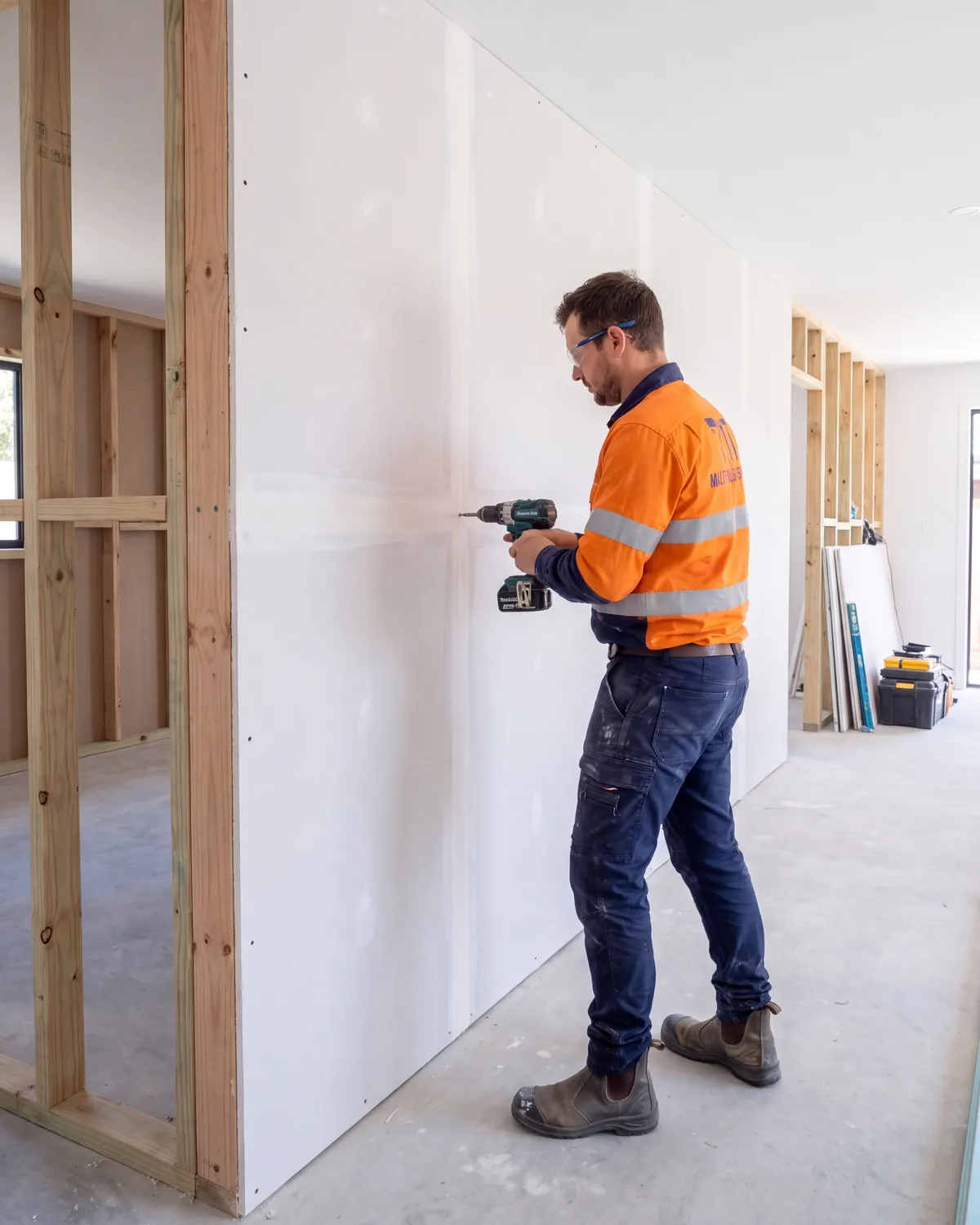
A plasterboard ceiling is held up by screws, nails and adhesive fixed to the battens or joists above. When those fixings start to let go, the ceiling tells you, slowly at first. Catching it early usually means a simpler repair, and it means nobody is standing underneath when a sheet finally drops.
Why plasterboard ceilings sag
There's rarely one cause. In Queensland homes, these are the ones we see most:
- Adhesive that has given up: many ceilings rely partly on glue daubs between the board and the framing. Years of heat in a roof space can dry them out until they no longer hold.
- Too few fixings: if the sheets were fixed with fewer screws or nails than they needed, the board has less to hang on to as it ages.
- Water: plasterboard that gets wet loses strength and gets heavier at the same time. Even a leak that has since been fixed can leave a sheet weakened.
- Weight from above: boxes stored in the roof space resting on the ceiling, or someone stepping between the joists, can push sheets down and break their fixings.
- Humidity and movement: the house and roof framing move a little with heat and moisture. Over many seasons that working loosens fixings, especially in older ceilings that were nailed rather than screwed.
The warning signs
Screw or nail pops
Small round bumps or cracked circles in the paint, usually in straight lines across the ceiling, are fixings pushing through the surface or the board pulling away from them. A few pops scattered across a ceiling are common and often cosmetic. A cluster of pops in one area, especially with a dip nearby, means the board there is losing its grip.
Cracks along the joints
Plasterboard sheets are joined with tape and setting compound. When one sheet starts to drop and its neighbour doesn't, the join between them cracks. A crack that runs dead straight along a joint and gets wider, or one side that sits lower than the other, is a sign the sheet is moving.
Sheets dipping between the battens
A sagging sheet often shows as a gentle belly between the framing members, or a whole sheet that sits lower than the ones beside it. It can be hard to see looking straight up. Shine a torch along the ceiling at a low angle, or stand in a corner and look across the room. Shadows show up any waves in the surface.
Cornice separating
A fine, even crack along the cornice is common in Queensland homes and often just seasonal movement. A gap that is opening up, a cornice that has pulled away from the wall in one section, or a cornice that sits lower at one end is different. That often means the ceiling sheet it's fixed to is dropping.
Other clues
- Fine plaster dust or crumbs on the floor or furniture under one area
- Creaking or cracking sounds from the ceiling, especially in hot weather
- A water stain together with any of the signs above
Cracks in walls are a separate topic. If that's what you're seeing, our guide to plaster cracks and when to worry goes through them.
How to keep an eye on it
If the signs are small and you're not sure, it helps to watch the ceiling for a few weeks:
- Take photos from the same spot each time, with a torch held low across the ceiling so the shape shows up.
- Lightly mark the ends of any cracks with a pencil and write the date.
- Note whether things change after hot spells or heavy rain.
- If the dip gets deeper, cracks lengthen or more pops appear, don't wait. Get it looked at.
Please don't climb into the roof space to check the fixings unless you're comfortable doing it safely. Standing between the joists can put a foot straight through the ceiling, and there may be electrical cables up there. We can check it for you.
When it's urgent
Some signs mean you should stop monitoring and act now:
- A sag that has appeared or grown quickly, over days rather than months
- A bulge holding water, or a ceiling that's dripping
- Cracking or popping noises from the ceiling
- A sheet edge or section that is hanging down or has come away from the framing
- A sag over a bed, cot, couch or anywhere people sit or sleep
If you see any of these, keep everyone clear of the area, shut the door to the room if you can, and call a professional. If there's water near a light or ceiling fan, turn the power off at the switchboard and call a licensed electrician. Don't try to push the ceiling back up or prop it yourself. A sagging sheet can be heavier than it looks, especially if it's holding water. If water is the cause, our guide to repairing a water-damaged ceiling explains what needs to happen first.
What the repair involves
The fix depends on the condition of the board and what's causing the sag.
- Sound board that has dropped: if the plasterboard is dry, flat and unbroken, it can often be supported, lifted back into place and re-fixed to the framing with screws at the right spacing. The joins are then re-taped and set, and the ceiling painted.
- Damaged or bowed board: board that is soft, cracked through or has taken on a permanent bow is cut out and replaced with new plasterboard, set flush with the ceiling around it.
- Cornice: cornice that has pulled away is re-fixed, or replaced where it has cracked or broken.
While we're there, we check the roof space above the sag. If the cause looks like something beyond the ceiling itself, such as damaged roof framing, a leak or a problem with the structure, we'll tell you and point you to the right person to assess it before we repair the ceiling. Some older homes also have ceiling sheets that contain asbestos, so we'll let you know before anything is cut if it needs testing.
Getting a sagging ceiling looked at
We repair sagging ceilings and cornice across the Gold Coast and Brisbane through our ceiling repair service. If you're not sure whether what you're seeing is a problem, send us a photo of the whole ceiling and a close-up of the worst spot, ideally with a torch shining across it. We'll tell you honestly whether it can wait, and if it can't, we'll quote the repair.