Repairs
Sliding door off its track: what to check and when to call
A patio slider that has jumped the track or a cavity door hanging crooked is usually down to rollers, the track or grit. Here's what you can safely try first, and when to stop.
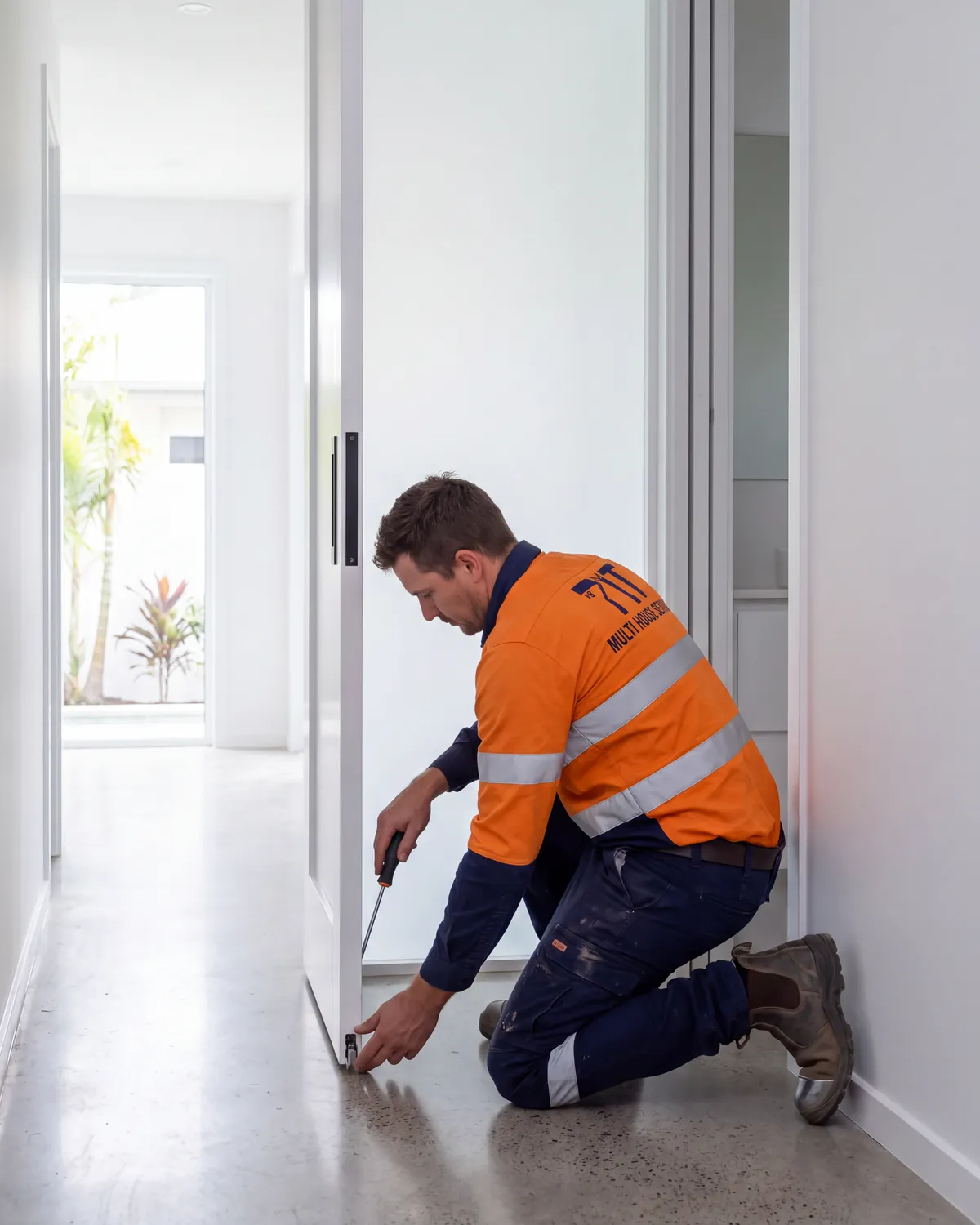
A sliding door that has come off its track is one of those jobs that looks simple and sometimes is. Other times, pushing it back on just hides a worn roller that will drop the door again next week. Here's how the two most common types work, why they come off, and what you can safely check before calling anyone.
Two kinds of sliding door
Patio sliders are the aluminium-framed glass doors that open onto a deck, balcony or yard. The door sits on rollers in its bottom edge, and those rollers run along a raised rail in the floor track. A guide at the top keeps the door upright.
Cavity sliders are the internal doors that disappear into the wall. They work the other way round: the door hangs from rollers that run in a track hidden in the head of the cavity, and a small guide at the floor stops the bottom swinging. Wardrobe sliders are similar to cavity doors, usually with rollers at the top or bottom and guides at the other end.
Why patio sliders come off the track
- Worn rollers: over time the wheels flatten, crack or seize. The door then sits lower, drags on the track and can ride off the rail.
- Rollers set too low: if the adjustment has dropped, the bottom of the door sits close to the track and can jump off when it's pushed hard.
- Grit and debris: sand, dirt, leaves and pet hair pack into the track, lift the rollers and push them sideways. It's common in coastal homes where sand blows or walks in.
- A damaged track: a dent or bend in the rail, often from something heavy being dragged across it, can kick the rollers off.
- A knock: a door slammed or bumped hard can lift off the rail, especially if the top guide is loose.
Why cavity sliders come off
- A worn or broken roller: the door drops at one end and the roller slips out of the track.
- A loose hanger: the bolts that connect the door to the rollers can work loose, so the door sits crooked.
- A missing or broken floor guide: without it, the bottom of the door swings, scrapes the inside of the cavity and can lift the rollers off.
- Something in the way: a door pushed hard against a toy, a doorstop or something that has fallen into the cavity can jump off the track.
- A dropped or bent track: less common, but if the track inside the wall has moved, the door won't run true however well it's adjusted.
What you can safely try
For a patio slider
- Clean the track. Vacuum it, scrub out packed grit with a stiff brush and wipe it down. This alone fixes a lot of doors that grind or jump.
- Check the rail. Run your finger along it and look for dents, bends or lumps.
- Look for the adjusting screws. Most patio doors have a small hole near each bottom corner, on the edge or face of the door, sometimes behind a plastic cap. Turning the screw inside raises or lowers the roller. Small turns, a little at each end, are enough. If the door is sitting low and dragging, raising both ends slightly often stops it riding off.
- Use a dry lubricant. A dry silicone spray on the track helps. Avoid oil and grease, which hold on to dirt and make things worse.
A glass patio door is heavy and awkward. If it has come fully off the track or is leaning out of the frame, don't try to lift it back on alone. It can fall outwards, and the glass is a real hazard. Keep people clear and call for help.
For a cavity slider
- Check the floor guide. Make sure it's there, screwed down and not broken. A missing guide is a common cause.
- Clear the cavity. With a torch, look into the gap for anything that has fallen in or is blocking the door.
- If the door has simply jumped off, you can sometimes lift it gently and guide the rollers back into the track. If it goes back on and runs smoothly, keep an eye on it.
Don't force a cavity door, and don't leave it hanging at an angle. A door hanging crooked can bend the track inside the wall or crack the plaster around the opening, which makes the repair bigger.
When to stop and call
- The door keeps coming off, even after cleaning and adjusting
- A heavy glass door is off the track, leaning or won't move
- The adjusting screws are seized or don't change anything
- You can hear grinding, or see broken or flattened roller wheels
- A cavity door is jammed inside the wall or hanging crooked
- There's cracking in the plaster around a cavity, or the door rubs the cavity walls
- The glass is cracked or broken, which is a job for a glazier
What a repair usually involves
For a patio door, we lift the door out, replace worn rollers with ones that suit the door, clean and straighten the track where possible, then set the height so the door runs level and meets the frame evenly. For a cavity door, we take off the door stops or head trim, lift the door out, replace the rollers or hangers and fit a working floor guide. If the track inside the wall is damaged, a small section of plasterboard may need opening, then patching and painting.
Parts for older or discontinued sliding systems can take some tracking down. A photo of the rollers, or the brand name if it's stamped on the frame, helps.
Keeping sliders on track
- Vacuum patio tracks regularly, more often near the beach or if you have pets.
- Keep doormats and rugs clear of the track.
- Slide doors closed gently rather than letting them slam.
- Fit a doorstop or soft-close so cavity doors aren't pushed hard into the frame.
- Get a door adjusted as soon as it starts to scrape, before the rollers wear out.
Sliding screen doors run on rollers too, and they have their own common problems. Our guide on whether to repair or replace a fly screen covers those. If a hinged door is sticking rather than a slider, see why doors stick in summer.
Getting it fixed
We put patio, cavity and wardrobe doors back on track across the Gold Coast and Brisbane through our sliding door repair service. Send us a short video of the door sliding, or trying to, plus a photo of the bottom or top edge where the rollers are. That's usually enough for us to tell what's wrong and quote it.