Repairs
Fly screens: repair or replace?
A torn fly screen doesn't always need replacing. Whether to repair or start again comes down mostly to the frame, and the right mesh for where you live.
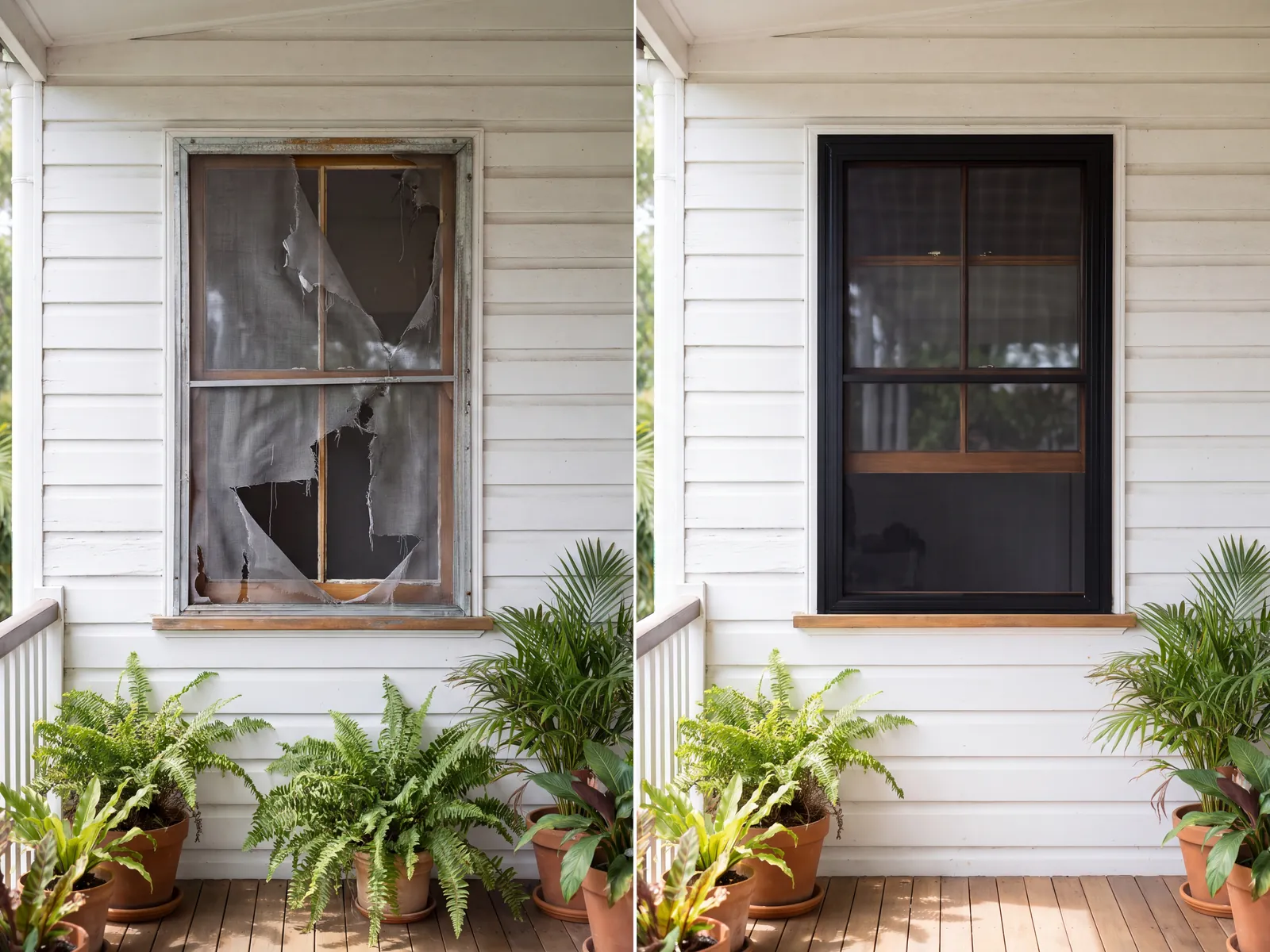
Fly screens take a beating in Queensland. They're in the sun all day, they get pushed by kids and pets, and near the coast they sit in salt air. When one tears or a screen door starts jumping off its track, the question is whether to fix it or start again. The answer depends mostly on the frame.
How a fly screen is put together
A standard window screen or screen door has four parts:
- The frame: usually aluminium sections joined at the corners
- Corner stakes or joiners: the pieces that hold the frame square
- The mesh: the fabric you see through
- The spline: a rubber cord pressed into a groove around the frame that holds the mesh tight
Sliding screen doors also have rollers at the bottom, guides at the top and a latch or lock. Hinged screen doors have hinges, a closer and a handle. Each of these can be replaced separately.
When a repair makes sense
If the frame is straight, square and sound, most problems can be fixed:
- Torn, sagging or holey mesh: the screen can be re-meshed. The old mesh and spline come out, new mesh is stretched across and new spline goes in.
- Mesh pulling out at the edges: usually the spline has shrunk or perished in the sun. New spline fixes it.
- A sliding screen door that drags, jumps the track or is hard to push: usually worn rollers, a dirty track or rollers that need adjusting.
- A screen door that won't latch or slams: often a latch, closer or hinge adjustment.
Re-meshing is also a good chance to upgrade the mesh type without replacing the whole screen.
When replacing is better
- The frame is bent, twisted or kinked, so it won't sit flat or seal against the window
- Corners have cracked or the corner stakes have broken, and the frame has gone out of square
- The aluminium is badly corroded, which we see a lot close to the beach
- The screen no longer fits the opening because the window or door frame has moved
- A screen door's frame has been damaged by pets or a hard knock
A new mesh in a bent frame will still leave gaps, and gaps are all a mosquito needs. In those cases a new screen made to measure is the better spend.
Choosing the right mesh
Fibreglass
The standard choice for most windows. It's flexible, easy to tension, doesn't dent and doesn't corrode, which makes it a good all-rounder on the coast.
Aluminium
Stiffer and a bit stronger than fibreglass, but it dents when pushed, and in salt air it can corrode and go chalky over time.
Pet mesh
A much heavier, coated mesh designed to resist claws and paws. It's thicker to look through, so most people use it on screen doors and low windows where pets get at the screens, and standard mesh elsewhere.
Stainless steel and heavy-duty mesh
Tougher meshes are available for high-traffic screen doors and harsh coastal spots. They cost more and are less flexible, so they're usually used where the extra strength is worth it.
A fly screen is made to keep insects out. It isn't designed to stop a child falling out of a window, or to keep an intruder out. If those are your concerns, look at proper window locks or security screens rather than relying on a fly screen.
Making screens last in Queensland
- Rinse screens with fresh water every few months, more often near the beach, to wash off salt and dust.
- Vacuum sliding door tracks and wipe them clean. Grit in the track wears out rollers fast.
- Use a dry silicone spray on tracks rather than oil, which attracts dirt.
- Close screen doors gently, or fit a closer, so the frame doesn't take repeated knocks.
- Fix small tears early, before they spread across the whole panel.
Signs it's time to act
- Insects getting in around the edges even when the screen is shut
- Mesh that's brittle, discoloured or sagging
- A screen door that sticks, scrapes or comes off its track
- White powdery corrosion on the frame
- Gaps between the screen and the window frame
Getting screens sorted
Our fly screen service covers re-meshing, new window screens, screen doors and pet mesh across the Gold Coast and Brisbane. If a screen door latch or closer is the problem, see locks and handles. Screens are also a good one to add to a handyman visit along with other small jobs around the house.
Send us a photo of the screen, including the corners and the frame, plus the rough size. We'll tell you whether a re-mesh will do or it needs replacing, and quote it.